Heiken Ashi Exit Indicator MT4 is an indicator that displays the color of traditional Heiken Ashi candles and combines them with a moving average line to form a band that follows the price. This indicator helps you identify the current trend and makes it easier to find entry and exit points.
Introduction to Heiken Ashi Exit Indicator MT4
Heiken Ashi candles are different from traditional candlesticks and are used to determine the market’s uptrend or downtrend. Compared to normal candlesticks, Heiken Ashi candles reduce noise and provide a smoother view of price action.
Heiken Ashi, which translates as “average bar” from Japanese, is particularly suitable for trend-following trading strategies.
Below is an image of the Heiken Ashi Exit indicator:
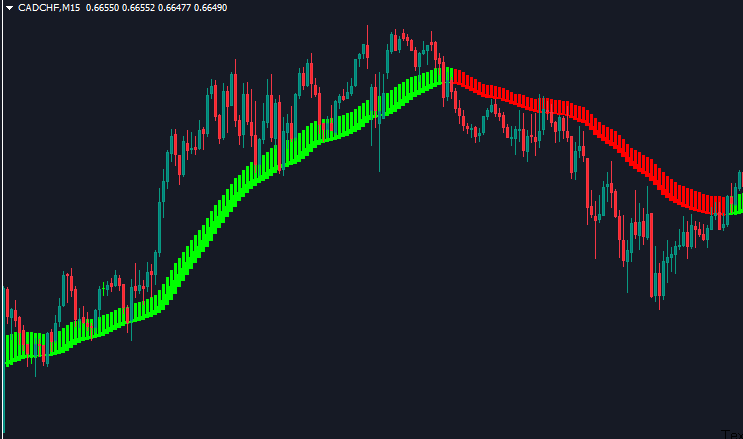
As you can see, when both the Heiken Ashi candles and the MA line are green, the market is in an uptrend, and you should look for BUY opportunities.
When both the Heiken Ashi candles and the MA line are red, the market is in a downtrend. In this case, you can wait for the price to pull back near the MA line to look for SELL opportunities.
This indicator works on all timeframes, but it is recommended to trade on higher timeframes, with a minimum of M15 (15 minutes), to avoid noise.
How to Use the Heiken Ashi Exit Indicator MT4 in Trading
Note: The Heiken Ashi Exit Indicator is a trend-following indicator, which means it is less effective in sideways or ranging markets without a clear trend. To achieve better trading results, you should combine it with market structure analysis.
Let’s return to the example with the CADCHF pair above:
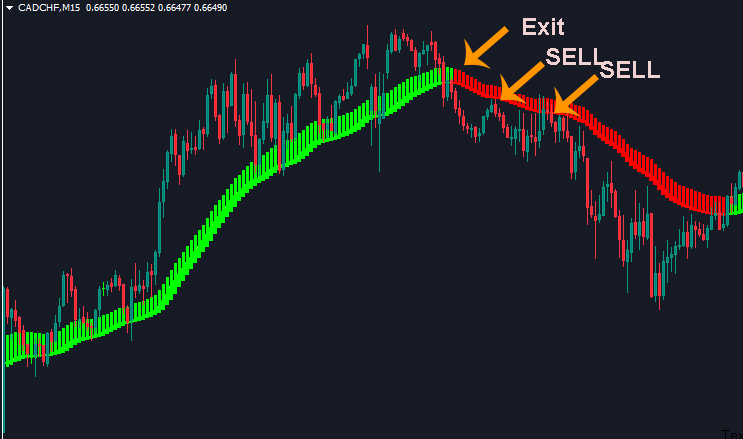
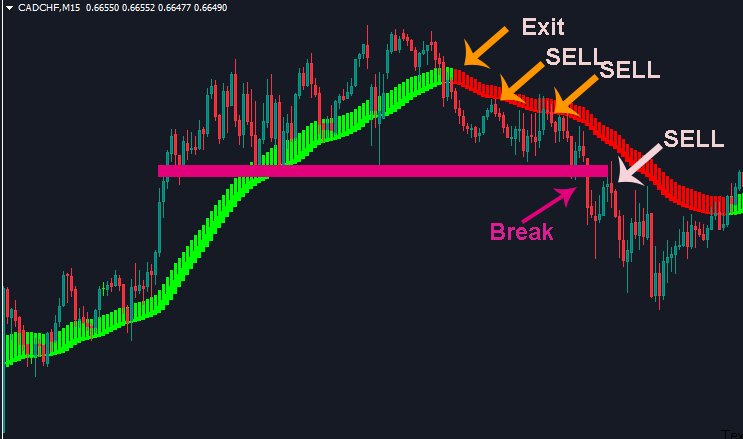
When the color of the Heiken Ashi candles changes from green → red, it indicates that the market trend may have shifted from bullish to bearish. If you already have a profitable BUY trade at this point, you may consider closing it.
The next two arrows represent two SELL opportunities that you could take advantage of.
If you prefer safer trades, you can wait for a breakout before entering at the white arrow number 4:
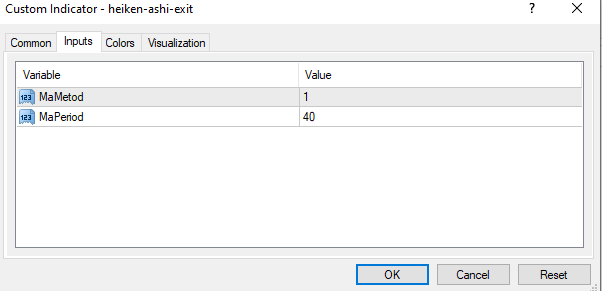
Setting
-
MA Method: Adjust the type of Moving Average (SMA, EMA, etc.)
-
MA Period: The period of the Moving Average line